
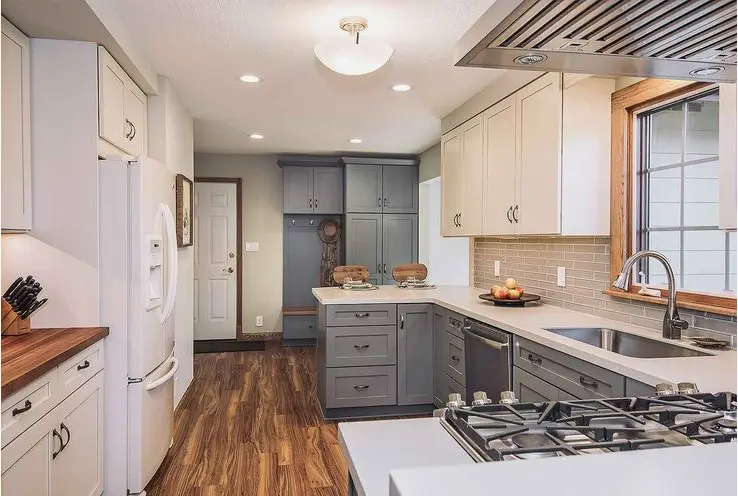
If your kitchen looks outdated or no longer works well for your household, you may be wondering whether you need a complete kitchen remodel or if replacing the cabinets would be enough. The right choice depends on the condition of the rest of the kitchen, your goals, your budget, and how much you want to change.
Cabinets are one of the most noticeable parts of a kitchen, so replacing them can make a significant difference. However, if your kitchen also has outdated flooring, countertops, lighting, plumbing, electrical systems, or an inefficient layout, replacing cabinets alone may not solve the problems you are experiencing.
Understanding the difference between these options can help you decide what type of project makes sense for your home.
When Should You Replace Only the Kitchen Cabinets?
Replacing only the cabinets may be a practical option when most of your kitchen is still in good condition.
Cabinet replacement may make sense if:
- Your kitchen layout already works well
- The flooring is in good condition
- Your countertops are still suitable for your needs
- The plumbing and electrical systems do not need major changes
- Your appliances are relatively new
- You mainly want to update the appearance of the kitchen
- Your cabinets are damaged, outdated, or no longer provide enough storage
If the rest of the kitchen meets your needs, focusing on the cabinets can give the room a significant visual update without changing every part of the space.
When Is a Full Kitchen Remodel a Better Choice?
A larger kitchen remodeling project may be more appropriate when several parts of the kitchen need to be updated at the same time.
Consider a full remodel if you have problems such as:
- An inefficient kitchen layout
- Insufficient storage
- Outdated countertops
- Damaged or worn flooring
- Poor lighting
- Old plumbing fixtures
- Outdated electrical components
- Appliances that need to be replaced
- Limited countertop workspace
- Walls or openings that need to be changed
A complete kitchen remodel gives you the opportunity to address these issues together rather than replacing cabinets now and dealing with other problems later.
What Is the Difference Between Cabinet Replacement and Kitchen Remodeling?
The biggest difference is the scope of the work.
Cabinet replacement focuses primarily on removing existing cabinets and installing new ones. Depending on the project, homeowners may also update hardware, countertops, or other related elements.
Kitchen remodeling can involve much more. A remodeling project may include cabinets, countertops, flooring, lighting, appliances, plumbing fixtures, painting, electrical work, and changes to the kitchen layout.
A kitchen remodel can therefore provide a more comprehensive update, while cabinet replacement is more focused.
Does Your Kitchen Layout Work for You?
One of the most important questions to ask is whether you like the current layout.
If you have enough storage, your appliances are positioned conveniently, and you have sufficient workspace, replacing the cabinets may be all you need.
But if you constantly find yourself working around an awkward layout, a cabinet replacement alone may not solve the problem.
For example, you may have:
- Too little counter space
- Appliances that are poorly positioned
- A lack of storage
- A kitchen island that does not fit the room
- Narrow walkways
- Poor separation between cooking and preparation areas
A remodeling project can address these issues by changing the way the space is organized.
What Condition Are Your Countertops In?
New cabinets can look out of place if the countertops are significantly worn or outdated.
Before deciding on cabinet replacement, consider whether your existing countertops still meet your needs. If they are cracked, stained, damaged, or simply too small for your kitchen, you may want to include new countertops in the project.
If the countertops are in good condition and fit your new cabinet design, you may be able to keep them.
Do You Need Better Kitchen Storage?
Storage is another important consideration.
If your current cabinets are structurally sound but you simply dislike their appearance, updating the cabinet doors, hardware, or finish may be an option depending on their condition.
However, if the cabinets do not provide enough storage, a larger remodeling project may give you more flexibility.
New cabinet configurations can potentially provide better use of vertical space, corners, drawers, pantry areas, and other parts of the kitchen.
Are Your Kitchen Floors Still in Good Condition?
Flooring is easy to overlook when planning a cabinet project.
If your existing flooring is damaged, outdated, or does not work with the new design, replacing it at the same time may make sense. Depending on the project, flooring work may be easier to coordinate before new cabinets and other finished elements are installed.
If the flooring is already in good condition, there may be no reason to replace it simply because you are installing new cabinets.
Should You Update Appliances at the Same Time?
Cabinet replacement can also be an opportunity to consider your appliances.
If your refrigerator, range, dishwasher, or other appliances are nearing the end of their useful life, think about whether you want to replace them as part of the project.
This is especially important if the new kitchen design will change the location or size of your appliances. Planning these decisions together can help avoid having to modify newly installed cabinets later.
What About Kitchen Lighting?
Lighting can have a major effect on how a kitchen looks and functions.
If your kitchen has only one central light fixture, dark work areas, or outdated fixtures, you may want to consider lighting as part of a larger remodel.
A kitchen remodeling project may allow you to plan lighting around specific areas such as:
- Countertops
- Kitchen islands
- Sinks
- Cooking areas
- Dining spaces
- Cabinets
If your current lighting works well, however, replacing cabinets alone may still be a reasonable approach.
What About Plumbing and Electrical Work?
Older kitchens sometimes have plumbing or electrical components that need attention.
If you are already planning a larger renovation, it can be an appropriate time to evaluate these systems before the walls, cabinets, and other finished surfaces are completed.
Electrical outlets, lighting, plumbing fixtures, and appliance connections may all need to be considered depending on the scope of your project.
This is one reason it can be useful to determine the full scope of a kitchen renovation before ordering cabinets.
Which Option Costs More?
In general, replacing only the cabinets will involve less work than remodeling the entire kitchen. However, the total cost depends on the materials, cabinet design, labor, countertop choices, appliances, flooring, plumbing, electrical work, and other project requirements.
A cabinet-only project may be suitable when the rest of the kitchen is already in good shape.
A larger remodel requires a greater investment, but it can address multiple problems at once and give you a more complete transformation.
Instead of choosing based only on the initial price, consider what your kitchen actually needs and whether you expect to make additional changes in the near future.
Can You Remodel a Kitchen in Stages?
Yes, some homeowners choose to complete kitchen improvements in stages.
For example, you might replace cabinets first and plan other improvements later. However, this approach should be carefully planned.
If you already know that you will eventually replace the flooring, countertops, lighting, or layout, discuss the complete plan before starting the first phase.
Planning can help prevent new work from interfering with improvements that were already completed.
Questions to Ask Before Choosing
Before deciding between cabinet replacement and a complete kitchen remodel, ask yourself:
Does my current kitchen layout work well?
If yes, cabinet replacement may be enough. If no, a larger remodel may be worth considering.
Are my countertops and flooring in good condition?
If they need replacement soon, combining the work may make sense.
Do I need more storage or workspace?
If you do, a new cabinet layout or broader remodel may provide a better solution.
Are my appliances still suitable?
If several appliances need replacement, include them in your remodeling plans.
Do my plumbing and electrical systems need updates?
Older kitchens may require additional work beyond cabinets.
Am I mainly trying to change the appearance or improve how the kitchen functions?
A cosmetic update may require less work, while functional problems often require a broader remodeling approach.
Should You Replace Cabinets or Remodel the Whole Kitchen?
There is no single answer for every home.
Replacing only the cabinets may be suitable when the layout, flooring, countertops, appliances, lighting, plumbing, and electrical components are already in good condition and you primarily want to update the cabinets.
A complete kitchen remodel may make more sense when the space has multiple outdated or poorly functioning elements and you want to improve the layout, storage, lighting, surfaces, appliances, and overall functionality.
The most important step is to evaluate the entire kitchen before deciding on the scope of work.
Plan Your Kitchen Remodeling Project With Johnny Home Improvement Contractor Inc
If you are unsure whether your kitchen needs new cabinets or a more comprehensive renovation, a professional evaluation can help you understand your options.
Johnny Home Improvement Contractor Inc provides kitchen remodeling services for homeowners who want to update the appearance, functionality, and use of their kitchen. Discussing your goals, existing kitchen, preferred materials, and budget can help determine what type of project is appropriate for your home.
Whether you need a focused cabinet update or a larger kitchen renovation, planning the project carefully from the beginning can help you avoid unnecessary work and make better use of your remodeling budget.